More bad news for college basketball

Image courtesy of Adobe Stock.

Looks like a new mega-scandal has burst on the college basketball scene. I’ve just started paying attention to it. Will describe a few articles on the fiasco and then let it sit for a while before discussing it in more detail.

The feds indicted assistant coaches from four named colleges with two more unnamed schools mentioned, with sufficient detail to allow guesses as to which school’s coaches will next face a perp walk.

Charges are described in Yahoo Sports on 9/26/17: FBI brings Armageddon to college basketball, and its’ just the tip of the iceberg.

Allegations are large payments going to promising high school recruits to get them attending particular schools. Named schools are Arizona, Auburn, Oklahoma State, and USC.


Continue reading “More bad news for college basketball”

Rapid economic growth of the American colonies before the revolution.

3D Growth Projections” by ccPixs.com is licensed under CC BY 2.0www.ccPixs.com

Take a look at how rapidly the colonies developed over the many years in advance of the successful American revolution. Comments are from An Empire of Wealth: The Epic History of American Economic Power by John Steel Gordon.

One part that is astounding to me is certain geographies were very conducive to a certain type of crop. That is why tobacco, or corn, or cotton, or fishing for cod thrived in certain areas.

Consider: export of tobacco from Virginia to England:

  • 1618 – 20,000#
  • 1622 – 60,000#
  • 1627 – 500,000 #
  • 1629 – 1,500,000#
  • 1638 – 3,000,000#

let’s look at the annual increase and compound rate of growth:

Continue reading “Rapid economic growth of the American colonies before the revolution.”

Nuclear launch protocol and timing

Drawing courtesy of Adobe Stock.

In case I ever want to make reference to such things, I now can cite an article that describes a guess at the nuclear launch protocols in place for the United States. Article also has speculation as to timing for each phase of the sequence.

Someday I may want to cite an unclassified source, so here it is:

Continue reading “Nuclear launch protocol and timing”

Why has there been such astounding economic success in the United States?

How to illustrate the super-abundance produced in the U.S.? Perhaps this view of a corn field, knowing there are huge fields of corn for a hundred miles in every direction. “An Iowa Summer Carpet” by cwwycoff1 is licensed under CC BY 2.0

Why these is so much economic output in the U.S. is a valuable question because once you can explain why the U.S. has seen such powerful growth for such a long time, there is a possibility, remote though it may be, for others to have the same prosperity.

Each of us has to search for the answer by yourself. I suggest you seriously consider the first chapter of An Empire of Wealth: The Epic History of American Economic Power by John Steel Gordon if you want to get your arms around the answer.

It is not just that the US is a large country that goes from coast to coast.

Continue reading “Why has there been such astounding economic success in the United States?”

Energy update

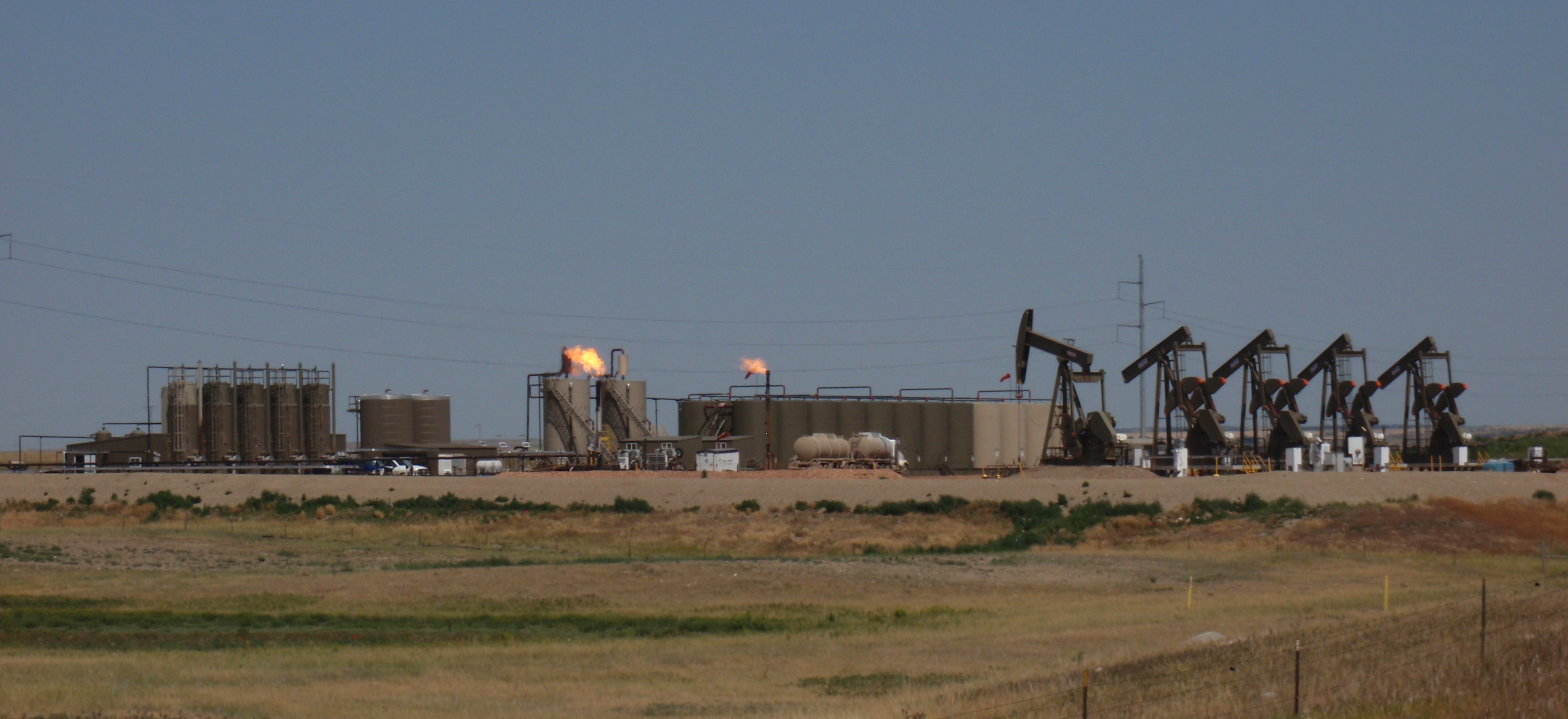
Five more reasons Saudi Arabia is in a jam and American pipelines are overfull. There will be many more reasons on that site before all the drilling is done. Oh, check out that gorgeous sky. Photo by James Ulvog.

A few articles that caught my interest over the last months on energy issues:

  • Another new field with one and half or two billion barrels of oil that not even the energy wizards were sure was there – Oh yeah, what Peak Oil?
  • Saudi Arabia cracks down
  • Two billion a year is consumed for lifestyle support stipends paid to every descendant of the house of Saud
  • Pipeline capacity is constraint for otherwise expanding shale production
  • US hit crude export level of 1 million barrels a day this past summer

What Peak Oil?

7/12/17 – Houston Chronicle – Houston’s Talos Energy makes ‘significant’ find in Mexico’s waters – Two years ago the Mexican government allowed private companies to start exploring for oil in the country. The improved freedom for private companies to do what private companies do is paying off.

On 7/12 Talos Energy announced the “Zama-1” exploratory well has confirmed a new find which is estimated to hold between 1.4 billion and 2.0 billion barrels of oil-in-place.

Oil that can now be pulled from under the ocean to provide energy to a fuel-hungry world.

Continue reading “Energy update”

More news on drone use in the private sector.

The Wedge-tail eagle is aggressive enough to take out drones with seven-foot wingspans. Photo “wedge-tail 32” by Jim Bendon is licensed under CC BY-SA 2.0

Fun stories on the private sector use of drones:

  • Toy drone regulations in U.S. knocked down
  • Demand for commercial drone pilots is growing
  • How about using a swarm of disposable drones to deliver disaster aid?
  • Wedge-tail eagles taking out big drones

5/19/17 – The Hill – Court strikes down rule forcing toy drone users to register with govt – The FAA rule requiring every operator of every toy drone to register is contrary to a congressional law that prohibits the FAA from regulating toy drones. That is the conclusion of the federal Second Court of Appeals in DC.

Continue reading “More news on drone use in the private sector.”

Transatlantic transportation costs in 1937

1937 Hindenburg disaster shown on cover of magazine in 1950. Image courtesy of Adobe Stock.

A Niche in Time: “One of the Worst Catastrophes in the World” by Doug Messier at Parabolic Arc on 9/26/17 describes the May 6, 1937 Hindenburg Zeppelin disaster than ended the age of passenger flights on rigid airships. More in a moment on the ticket prices for transatlantic travel.

Several factors led to the end of rigid airships. The disaster took out half of the Zeppelin fleet, the U.S. blocked export of helium so the German company had no choice but to use (and would have continued using) explosive hydrogen, fixed wing aircraft were emerging as an alternative (specifically the then-cutting edge DC-3), Zeppelin travel was more expensive than ocean liners, and the disaster destroyed public confidence in the Zeppelins.

Check out the full article for more details.

According to the article, here are some tidbits on the cost of travel to cross the Atlantic at the time on the luxurious, faster airships and slower cruise ships:

Continue reading “Transatlantic transportation costs in 1937”