How fast do you suppose those drillers that scaled back could scale up? Out of focus photo by James Ulvog.
Had been planning to hold this article for a few days because of other posts I’d like to run first. Guess I’d better run it now. At the rate things are deteriorating in the Middle East, need to post it quickly before war headlines make it completely out of date.
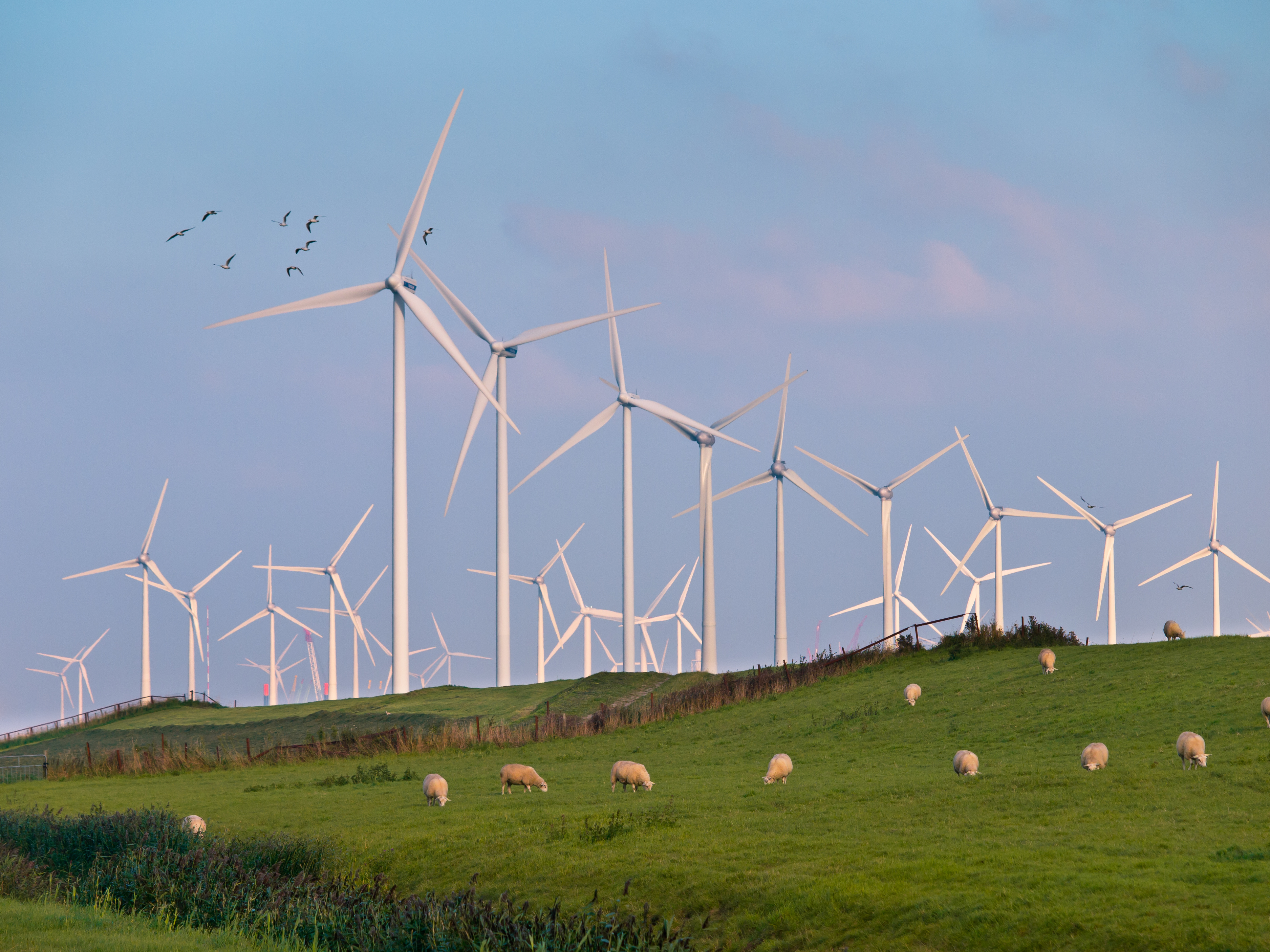
One of several catastrophic obstacles to relying on wind power to generate a large portion of our electricity is that wind turbines only generate electricity when the wind is blowing. That makes wind power quite unreliable.
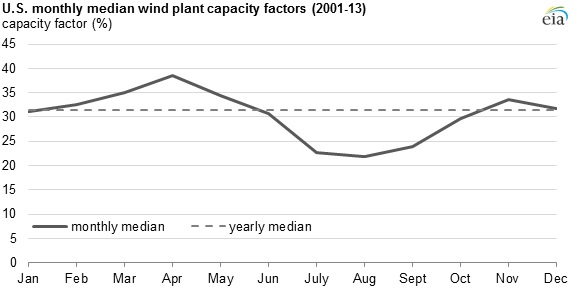
Diving further into that issue shows that the wind blows more in some months more than others and this variable capacity further varies by region.
Why is this an issue? Electricity must be generated at the instant it is needed (allowing for the time it takes for electricity to get from the generating source to your house). It cannot be stored.
Variability over the course of a year
Check out the following graph from the Energy Information Administration:
That graph, which can be found here, is in the public domain since it is government information. It shows that on average across the country during the course of a year wind facilities have an average capacity of about 32%.
I am trying to collect reference points for the cost to construct different types of facilities. Here are a few data points I’ve noticed lately and some data points I’ve mentioned before.
Remember to discount all the construction costs below by the 15% to 30% capacity rate. That means backup natural gas or coal plants are needed for the 70% or 85% of the minutes each day the facilities aren’t producing.
Offshore oil
I haven’t paid attention to offshore drilling so I’m not familiar with production levels or costs. Here is one data point I just saw:
Pumpjacks in North Dakota about ready to start pumping. Photo in October 2015 by James Ulvog. Not what OPEC planned.
Production in the Bakken field of North Dakota dropped 4,140 bopd from October 2014 to October 2014. Going from average output of 1,118,070 bopd a year ago to 1,113,930 in 10/14 is a drop of 0.37%, or about one-third of one percent.
Overall production in North Dakota dropped 14,565 bopd, or 1.23% in the same time.
I don’t think flat production is what OPEC, I mean Saudi Arabia, had in mind when they went for maximum production.
The future is so bright we need sunglasses. Image courtesy of DollarPhotoClub.com
The number of people working in manufacturing has been declining for many years. Those job losses will continue at the same time as technology disrupts other industries causing the loss of more jobs.
This is not a new concept. Technological advances have devastated farm employment over the last 150 years.
200 years ago brutal poverty was the norm across the planet. Not so today. Photo courtesy of DollarPhotoClub.com
Previously mentioned when I look at long-term economic trends I am incredibly optimistic. When I look at the headlines this morning or news from the political world, I am very discouraged.
200 years ago brutal poverty was the norm across the planet. Not so today. Photo courtesy of DollarPhotoClub.com
When I look at the political news or any news in general I get very pessimistic about our future.
In contrast, when I look at the amazing things happening beyond the headlines in today’s newspaper I feel incredibly optimistic.
Consider that private companies are developing the technology for space exploration. Consider the energy revolution created by hydraulic fracturing and horizontal drilling. Consider radical changes in technology that are making so many things easier, faster, and cheaper. Consider that anyone that wants to do so can publish their own book, distribute their own music, or create a feature movie.
As a tiny illustration, look at my company and pastimes. Technology allows me to run a high quality CPA practice without any staff. In my spare time I am a publisher and journalist. Anyone in Europe or North America or most of Asia could easily do the same and at minimal cost.
Until relatively recently, an illness-filled short life of dirt-eating poverty was the normal condition for practically everybody on the planet. In the last 100 or 200 years life has gotten radically better for practically everyone.
Actual productive effort in North Dakota. No spin here. Fuzzy photo by James Ulvog.
Two minor followups, first on the evening soap opera ‘Blood & Oil’ and then a documentary about Williston. Mentioned both of these previously.
In addition to getting the production run cut from 13 to 10 episodes, the drama “Blood & Oil” took a two-week vacation on the schedule during November. I was wondering if the show was even going to finish out the run of 10 episodes.
Well, according to Wikipedia the show finally made it through airing all of the reduced run. Ratings and share has stabilized in the basement with the number of viewers trending down.
The foreign reserves in Saudi Arabia looked something like this in 2015. Likely to continue for several more years. Image courtesy of DollarPhotoClub.com
It is rare I can find two articles in one newspaper edition that tell a story so well when you put them together. Check check out the Wall Street Journal on December 24:
The subtitle tells the story: OPEC expects prices to rise very slowly climbing only $14 over the next seven years and another $25 over the following 20 years. That would suggest the following:
$37 – Brent crude on Wednesday
$70 – 2020
$95 – 2040
Their forecast of worldwide demand:
92.8M bopd – now
97.4M bopd – 2020
Some other of their forecasts. Oil supply from Canada and US:
17.3M bopd – 2014
19.8M bopd – 2020
Um, that is not much of a slowdown.
Shale oil from US:
4.4M bopd – 2016
5.2M bopd – 2020
Umm, that is not even close to what OPEC had in mind.
Keep in mind that extremely bleak long-term forecast for oil prices.
Hunger sculpture at FDR Memorial in Washington DC. A monument to the man whose policies added extra years to the Depression yet who rarely gets credit for the unnecessary suffering. Photo courtesy of DollarPhotoClub.com.
An extra seven years.
That is the conclusion two economists published back in 2004: intentional policies from FDR added seven years of suffering for the country.
Yes, that analysis was published back in 2004. Sometimes it takes me a while to catch up on the news.
The cause of extending the Great Depression, according to the economists, was the National Industrial Recovery Act (NIRA) which protected industries from antitrust prosecution in return for adopting collective bargaining agreements. The result was unions drove up wages beyond where the market would have set them, companies were intentionally not prosecuted for collusion, thus companies cooperated in setting prices, which in turn drove up prices to consumers. As a result consumers had much more difficulty affording stuff and therefore actually bought less stuff, which further contracted the economy.
On the third attempt to do so, they successfully landed the first stage booster on land. After (not if, but when) they figure out how to do this routinely the cost of a space launch will drop radically. Article says the drop in cost could be in the range of a factor of 100.
One of the commenters on the following video gave this comparison: The flight on 12/21 is like launching a pencil over the Empire State Building, slowing down, and landing softly inside an area the size of a shoe box.
Philosiblog ponders the quote in the context of personal relationships. (Check out the link above.) Everything a person tells you is filtered by their worldview and their perspective of what they discuss. Likewise, you filter their comments based on your worldview and your perspective of what they said. You filter everything you see through your perspective.
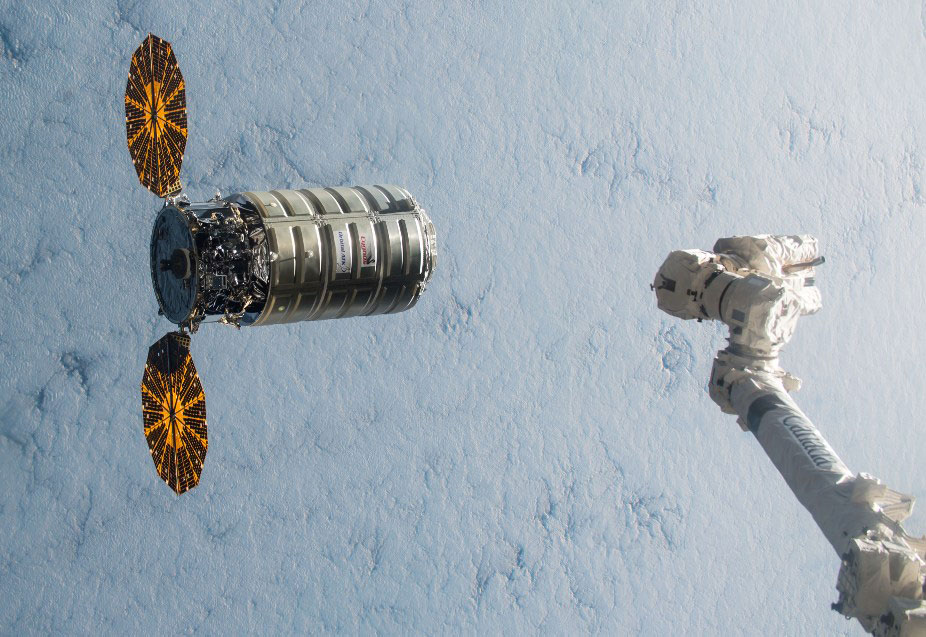
Cygnus capsule, ready to dock with ISS. Courtesy of Orbital ATK.
Recently I’ve seen a number of fun articles on space exploration. Here are a few to share: successful resupply launch to ISS after several failures across the industry, competition between spaceplane and reusable boosters, and China developing a new manned capsule.
Orbital lost a supply run in October 2014, Russia lost one earlier in 2015, and SpaceX lost one in June 2015. Keep in mind that launching rockets into space is the difficult task that is behind the putdown of ‘it isn’t rocket science’.
Lots of amazing things going on in the technology open frontier: military countermeasures to combat drones, registration requirement for small drones goes into effect today, and lots of federal agencies use cellphone spying technology.