Here is a graph I developed showing the worldwide production of oil over the last sixty years or so.
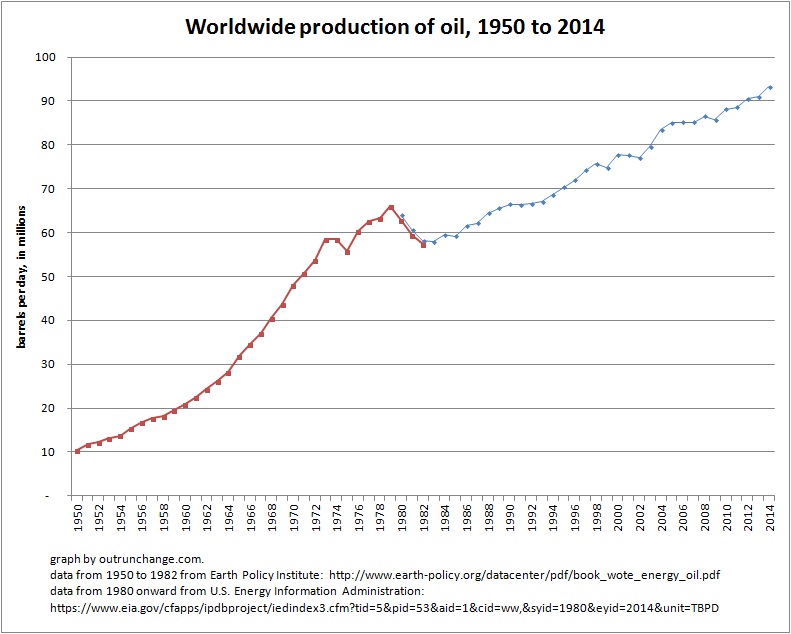
By the way, notice the complete lack of a peak, after which the production of oil goes into a permanent slide toward zero?
We need to learn quickly to keep up with the massive change around us so we don't get run over. We need to outrun change.

The fight over whether to shut down all man camps in Williston isn’t over.
3/19 – Bismarck Tribune – Man camp operators will fight back – The Williston city officials will have a second read of an ordinance to force all man camp operators within their reach to shut down. Target Logistics has dropped into the discussion a threat to sue if the city doesn’t give them more time to close down in an orderly manner.
The core argument is made yet again through an interview with a rotational crew worker. He works two weeks straight and then has two weeks off. Working twelve hours a day, plus time to get ready in the morning and turn in at night leaves little time to prepare food or do laundry.
Continue reading “Update on battle over crew camps in Williston”

A few articles catching my eye on consumer level solar, particularly the battle over non-solar retail customers involuntarily subsidizing rooftop installations of their neighbors, also known as net-metering. Of note is that in general solar power projects are only feasible with massive federal subsidies and residential solar power also requires heavy subsidies from other customers in the form of net-metering as well as all levels of government.
12/29/15 – Wall Street Journal – Nevada’s Solar Flare / State regulators roll back the net-metering electricity scam. Nevada is reducing the subsidy homeowners with solar panels get for electricity that isn’t used.
Currently, the electricity generated by solar panels that isn’t used by the homeowner is credited at the retail rate instead of the wholesale rate. That clever angle being played is that the retail rate also includes distribution costs, while wholesale rate reflects generation only.

Developments in the drone world are amazing. A few articles recently that caught my eye.
2/9 – Behind the Black – Oregon as seen by a drone – Watch the eye-popping video produced by a drone. No helicopter could produce those views. This is a foretaste of what drones will do:
[youtube=https://youtu.be/-STzCakG7VQ?t=24]
2/1 – Popular Mechanics – Dutch Police Are Teaching Eagles How to Capture Renegade Drones –
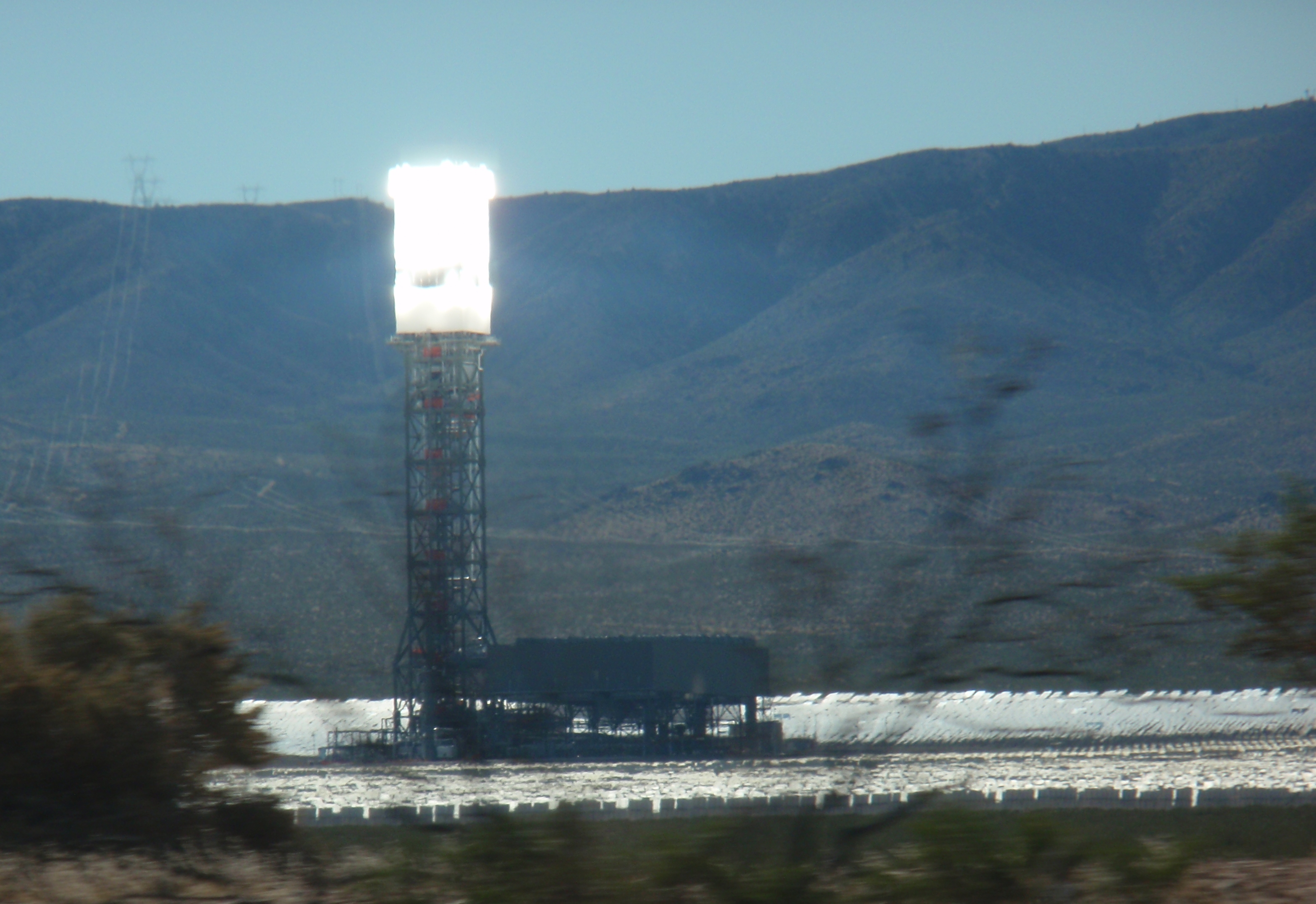
Mentioned yesterday that the Ivanpah wing-toaster facility was in danger of having to close because it wasn’t producing enough electricity.
The plant owners can breathe easier. The Press Enterprise reports on 3/17: PUC gives Ivanpah plant operators more time to increase output.
In what looks to be a contract dispute, PG&E pointed out Ivanpah plant wasn’t delivering the contractually required amount of electricity and therefore was in violation of some state rules or regulations or something.
That meant Ivanpah needed special dispensation to continue operations. On Thursday, the state gave that permission.
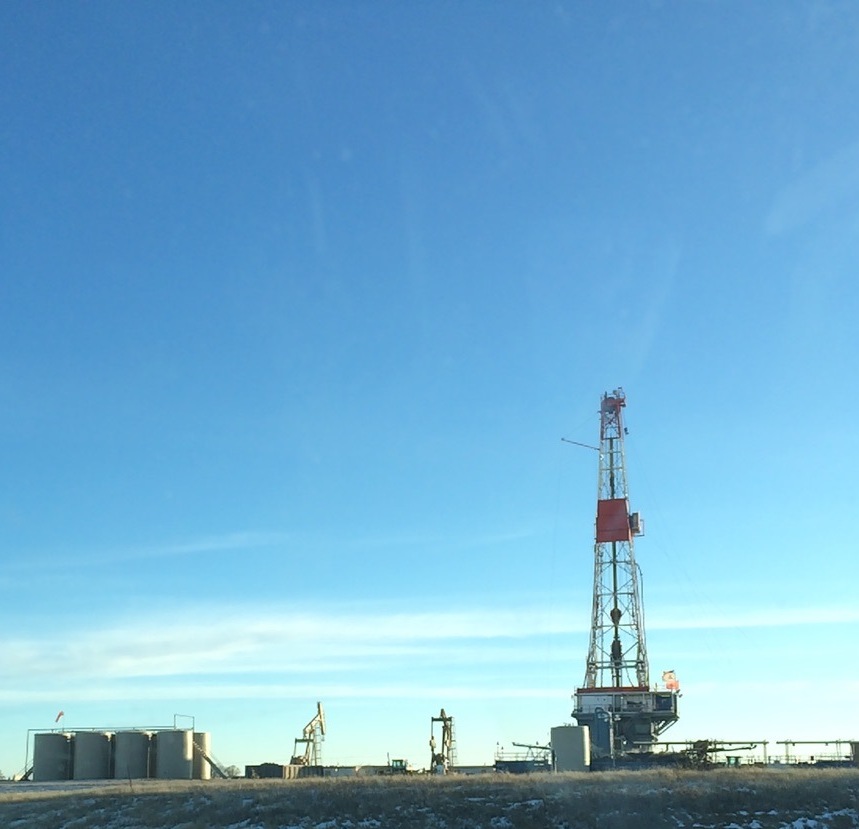
Additional coverage of Mr. McClendon and preliminary results of the investigation.
3/5 – Holman Jenkins at Wall Street Journal – Death of a Fracker – Subtitle is
“Drill, baby, drill.” Aubrey McClendon did, and left America stronger, richer and safer as a result.
Article says that whatever bit of economic growth the US has seen in for several years (I’m thinking about maybe for the last five years) is largely due to the frackers, of whom Mr. McClendon was a leading player. Author labels his risk tolerance as out there in the lunatic range.
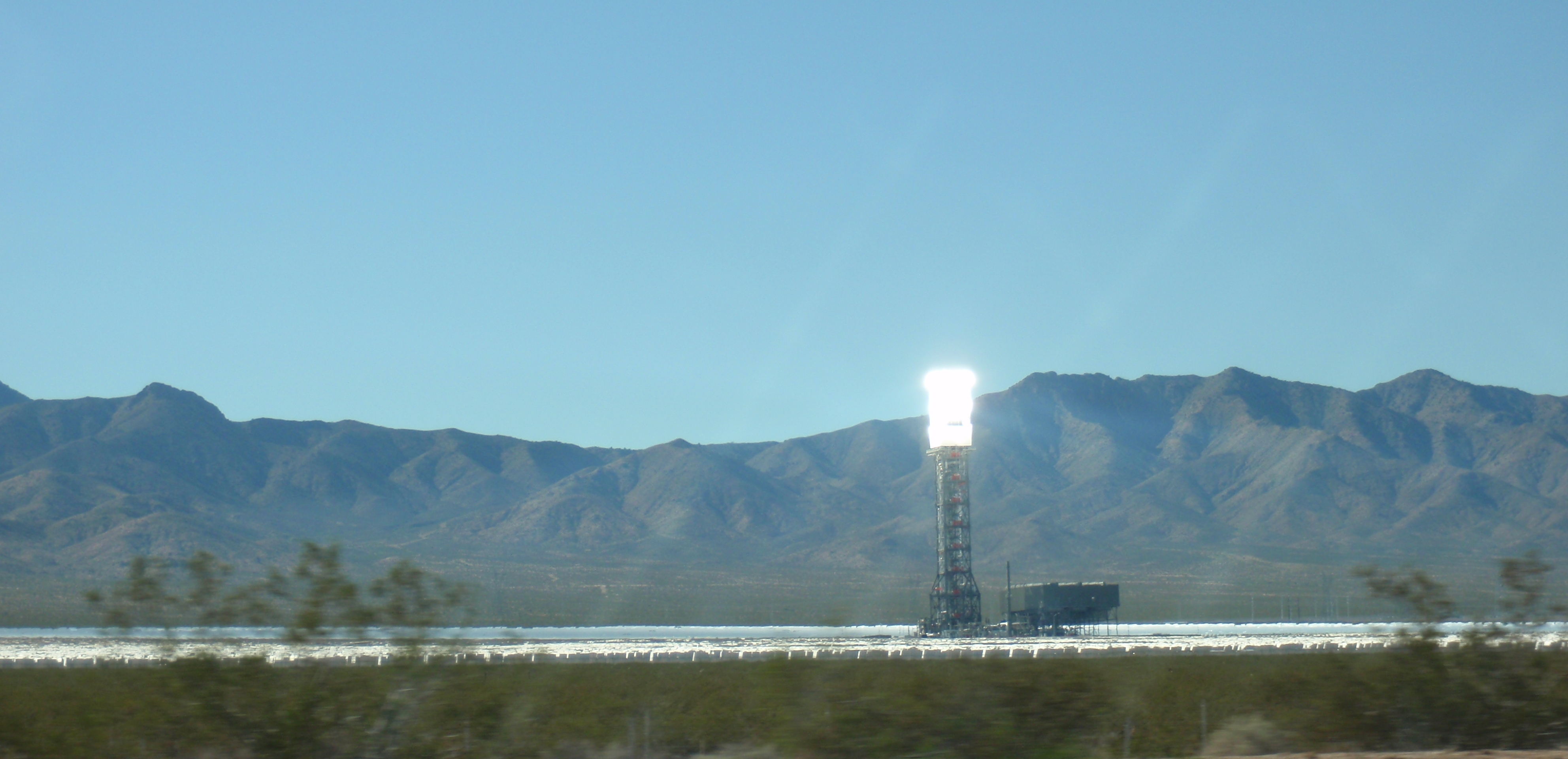
In news cheered by all migratory birds west of the Mississippi, The Wall Street Journal reports on 3/16 that Ivanpah Solar Plant May Be Forced to Shut Down.
In old news, the plant isn’t producing as much electricity as expected. The new information is the wing-toasting solar plant isn’t meeting its contractually required output. Due to peculiarities of the regulatory world, this means it needs special permission from state regulators to keep operating.
Update: One year reprieve to meet contract requirements granted when PUC approved a forebearance agreement between PG&E and Ivanpah.
Continue reading “Poorly producing Ivanpah plant might have to close due to low production”

I have not noticed a lot of coverage of the efforts to regulate the newly state-legal business of recreational marijuana. Here are a few articles catching my interest.
As a reminder, I am watching the efforts in Colorado and Oregon to develop a new industry which is highly regulated. This is a natural experiment to test my hypothesis that heavy-handed regulation will constrain a new industry.
1/5 – Denver Post via The Cannabist – Federal judge tosses Colorado marijuana banking lawsuit – State of Colorado chartered a credit union, the Fourth Corner Credit Union, with its business model of serving the state-legal marijuana industry. The credit union requested a master agreement allowing it to access the Federal Reserve system and thus participate in the banking system.
The FRB denied the application. The credit union sued.
A federal judge threw out the suit on the basis that allowing the credit union to operate would “facilitate criminal activity” since marijuana is illegal under federal law.
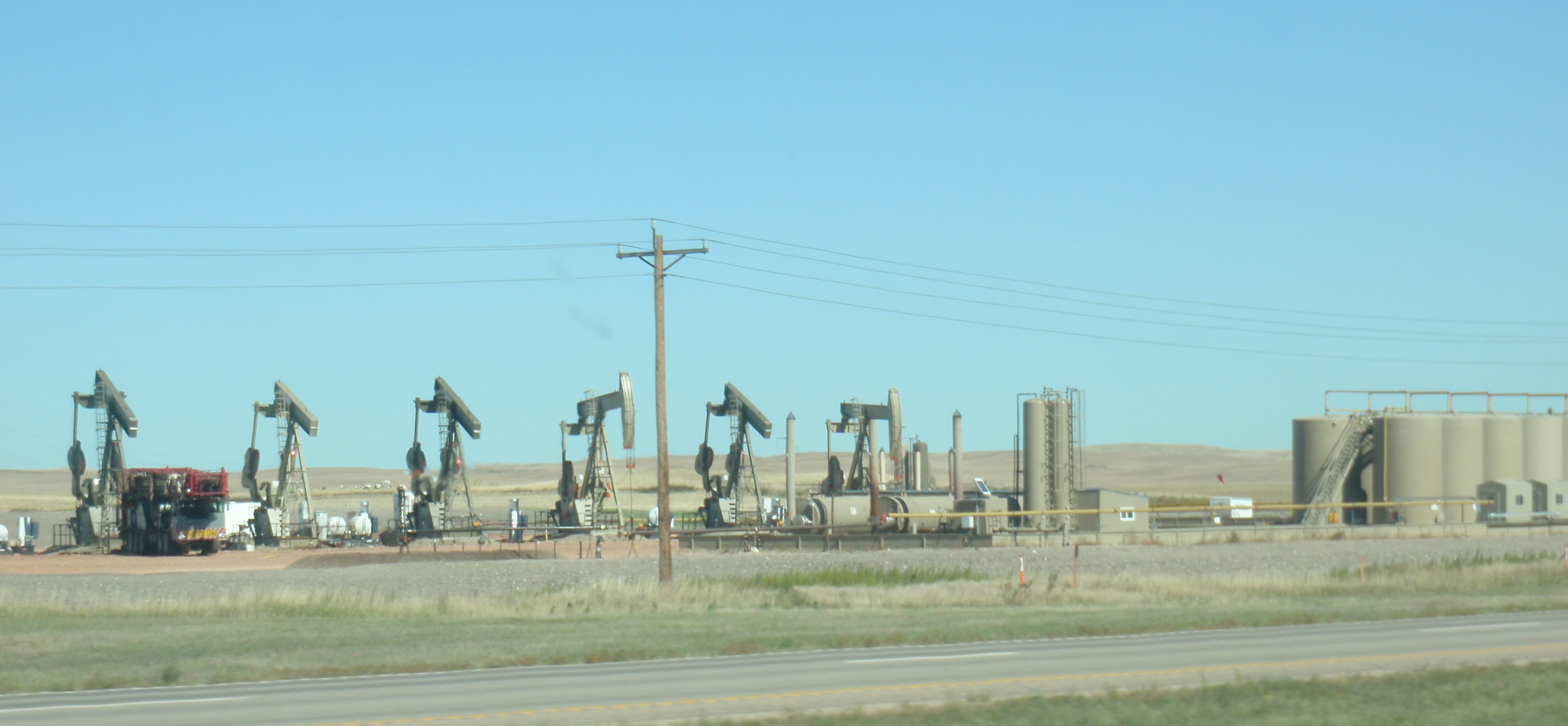
The increase in DUCs, or drilled but uncompleted wells, in North Dakota is getting to be old news. The new word of fracklog has emerged to describe and quantify the number of wells waiting to be fracked before they go into production. Two recent articles and then a graph of the fracklog.
Big headlines recently announced two companies have stopped fracking. This is neither a big story nor a new story.
Previously mentioned the following article which says Whiting Petroleum will stop fracking its wells in the second quarter. This means they will keep drilling but not frack & complete any wells.
Continue reading “The slowdown in North Dakota well completions. AKA fracklog.”
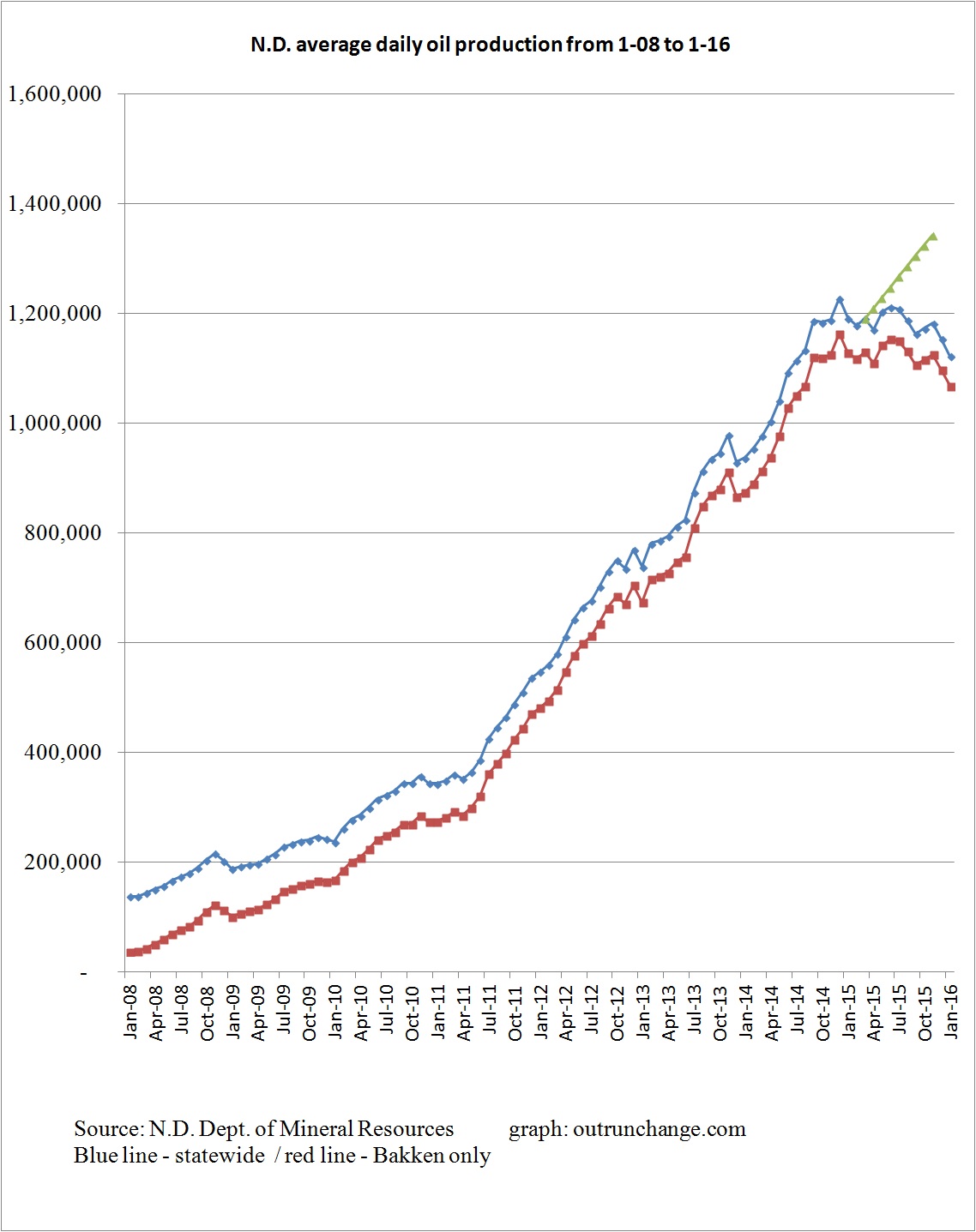
The year and half of effort by Saudi Arabia to shut down the shale industry is finally having a visible impact on production in North Dakota. Average production dropped 30,590 bopd to average of 1,122,106 bopd in January. That is a 2.65% drop in January following a 2.46% drop in December.
I’ve seen speculation that the January output would drop dramatically. Not sure that two and a half percent meets that particular forecast.
January production is down 105k bopd from the high water mark in December 2014. Going to take a reeeeeally long time to clear the 1 million bopd world-wide oversupply at that rate.
Don’t have time to update all my graphs this month, so here is the basic production graph I’ve been tracking:
The city of Williston has voted down a compromise plan that would have allowed man camps to continue within the city and the one-mile reach beyond city limits. Unfortunately, this issue illustrates one dark side of capitalism: the tendency towards cronyism, or insisting the government intervene to protect you from competition or demanding that the government give you special favors.
3/3 – Williston Herald reprinted at Dickinson Press – Big oil makes big push for crew camps compromise – An alliance of 31 energy companies are suggesting a compromise to city of Williston as an alternative to shutting down all crew camps.
Suggestion is to cut beds 25% in each of the next two years and double the per-bed ‘fee’ to $800.
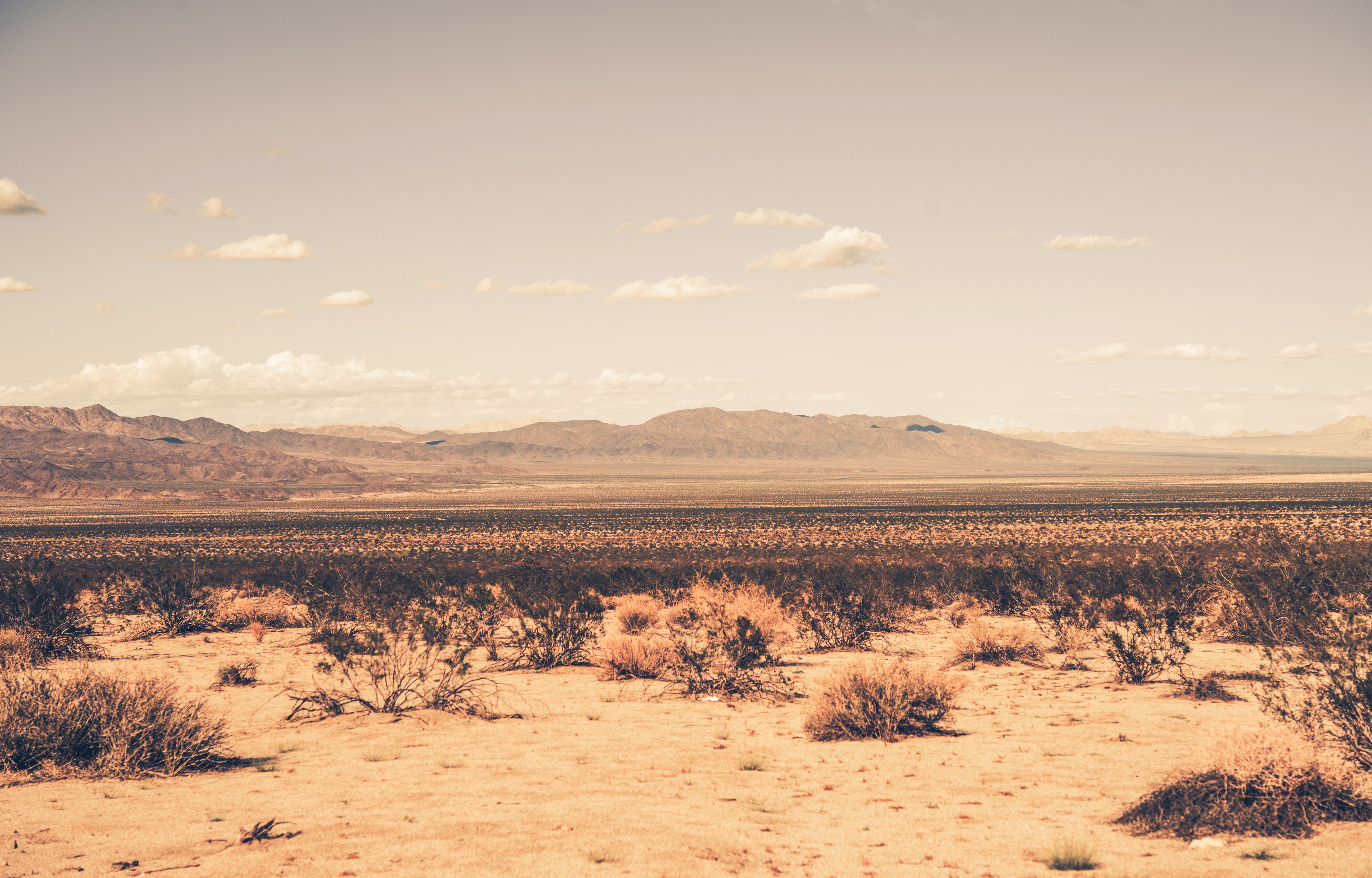
There will not be any environmental and economic destruction from the Palen project in Riverside County. It is as dead as the wildlife it would have otherwise killed.
12/16/15 – Chris Clarke at ReWire – Weird Twist for Riverside County Solar Project – The Palen Solar Power Project has been sold by its near bankrupt owner to the fifth owner. A bankruptcy court has approved the transfer from Abengoa Solar to Maverick Solar LLC (sub of EDF Renewable Energy).
An article explaining why Peak Oilers are in hiding prompted me to graph worldwide oil production.
Peak Oil doctrine was wrong when announced by Dr. Hubbert. It was wrong at the turn of the century before the energy revolution was kicked off by technology that was unimaginable 50 years ago. Peak Oil doctrine is still wrong. It will continue to be wrong.
Check out my graph to see a visual explanation of the foolishness.
1/21 – Hit and Run blog at Reason – Where Have All the Peak Oilers Gone? – Article points out that four of the most visible Peak Oilers are in hiding. Another one of them is still speaking out. In addition, he wrote a new forward in 2010 to his 2007 book proclaiming yet again oil production will go into an irreversible, inevitable slide.
Two data points that provide more proof of the foolishness of Peak Oil doctrine: Continue reading “Peak oil doctrine is still false. Please point out to me on my graph the irreversible decline in production after 1970. #45”

A few more articles on Aubrey McClendon. He will be well-remembered as a key player in the world-shaking energy revolution in the U.S.
For background on Mr. McClendon and how he played a massive role in the energy revolution check out:
3/4 – Russell Gold at the Wall Street Journal – How Aubrey McClendon Led Today’s Energy Revolution – Article calls him not just an advocate but the chief apostle of hydraulic fracturing. He took the lead in fracking and grabbing lots of land to explore.
Continue reading “More on Aubrey McClendon and his powerful legacy”

May God pour out peace on the family and friends of Aubrey McClendon, former CEO of Chesapeake Energy, who died yesterday in an automobile crash.
I hope his family and friends will work through their tragic loss and find peace at the end of the journey.
Mr. McClendon was a pioneer in the radical transformation of the energy industry in the U.S., having been a leading entrepreneur in extracting natural gas and crude oil from rock that was untouchable before the 1990s.