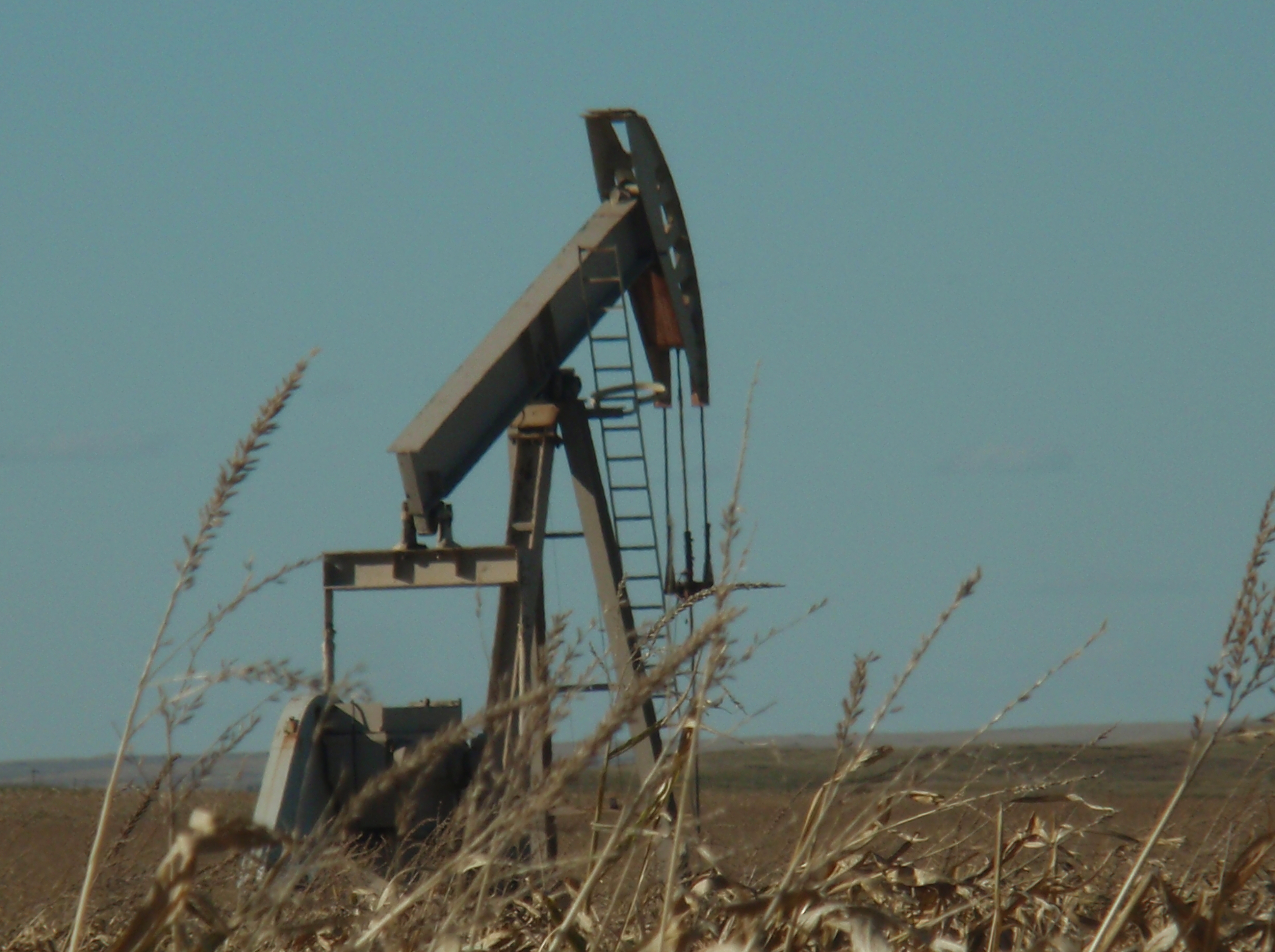
Oil production in North Dakota barely increases in 3-13
Production in March averaged 782,934 bopd, up about 0.5% from the slightly revised February amount of 779,144 bopd.
“This is an industry, not a boom.”
“It is going to last for a very long time!”
Million Dollar Way pointed out this great Powerpoint slide from Williston Economic Development on what’s going on in Bakken. Tom Rolfstad is the director.
If you are following the new frontier of energy on my blog, you will want to check out this presentation. It’s superb. Great points that are told without a speaker:
Amazing.
RBN Energy has a report, If You’ve Got the Money We’ve Got the Crude – new Refineries in North Dakota, that explains
North Dakota’s only refinery produces less than half the diesel the State consumes. To help remedy that disparity the first new refinery to be built in the Lower 48 since 1977 is under construction today and two more new refineries are planned.
Very cool. There is more demand for diesel in the state than the one refinery there can produce.
Here’s my simple summary:
There are a lot of factors explaining why drilling costs are higher in Bakken than elsewhere. Multiple factors explain why costs are dropping.
Seeking Alpha, by Michael Filloon, explains in Bakken Update: Bakken Well Costs Are Decreasing Faster Than Companies Indicate.
Just a few reasons costs are higher: The formations are deeper, infrastructure hasn’t had decades to develop so isn’t as strong as elsewhere, the extreme cold weather makes drilling more difficult, the spring thaw makes truck deliveries slower because of lighter loads.
A number of factors beyond pad drilling and growing efficiency are at play to reduce costs. The article’s conclusion: Read more…
The USGS updated their estimate of the amount of oil that is undiscovered, technically recoverable in the Bakken field. Second paragraph of their press release says:
The USGS assessment found that the Bakken Formation has an estimated mean oil resource of 3.65 BBO and the Three Forks Formation has an estimated mean resource of 3.73 BBO, for a total of 7.38 BBO, with a range of 4.42 (95 percent chance) to 11.43 BBO (5 percent chance). This assessment of both formations represents a significant increase over the estimated mean resource of 3.65 billion barrels of undiscovered oil in the Bakken Formation that was estimated in the 2008 assessment.
This means the mid-point (statistically correct phrase: mean) of the total oil that is technically recoverable with current technology is 7.4 billion barrels of oil. Their assessment is that the probability is 95% that there will be at least 4.4B and the probability is 5% that there could be as much as 11.4B.
Bruce Oksol provides a voice of calm in response to an alarmist editorial in the Bismarck Tribune. The editorial mentions that the state government expects 6,000 wells to come on-line in the next three years. That will lead to huge increases in drilling, truck traffic, and overall activity. At least according to the paper: Prepare for a “big surge” in Bakken.
Actually, that would be a continuation of the pace of drilling that is going on now. Today. More Details on the Coming Surge in The Bakken: 6,000 Additional Bakken Wells Over The Next Three Years reminds us that the current production rate is already 2,000 new wells a year.
Since I’m an accountant, I keep an eye out for info on how one well might perform over its lifetime. Any real data for a well, let alone enough to look at averages, would be a closely guarded trade secret, so I’ll talk about public info.
Of course, if someone wanted to confidentially drop me some actual data & forecasts for real wells, I’d be happy to describe anonymous data. In the meantime…
Ms. Tessa Sandstrom, of the North Dakota Petroleum Council gave a speech reported by the Minot Daily News: Oil Boom drives on.
The article gives this info: Read more…
There are downsides to a booming economy. Things can get out of control with an overwhelming increase in men who work long hours for good money: they need something to do when not working.
With a serious imbalance in the proportion of men and women in Williston, guess what, those guys wind up at the city’s two strip clubs.
The two places are next door to each other. Not a good deal – get bounced out of one for being rowdy and you can stumble to the other.
As you would expect there has been a surge in police calls to the two clubs.
Bruce Oksol at Million Dollar Way provides one hard data point for costs to drill in Bakken for one producer in their particular locations with their specific techniques. May not apply to any other drillers, but a hard data point is useful.
Bakken Well Costs says: Read more…
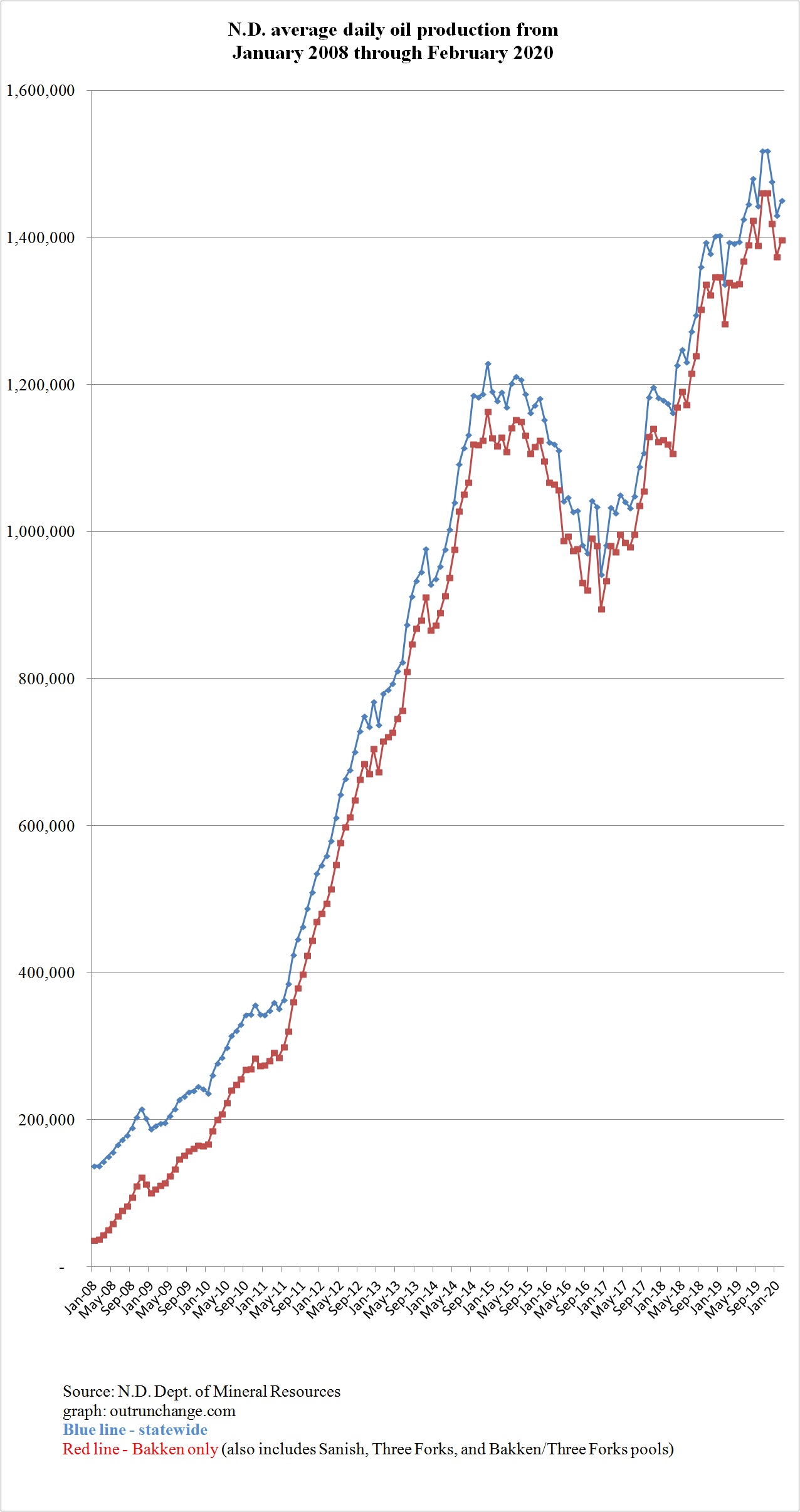
February production averaged 779,032 barrels per day. That is up 5.57% over January. It is only up 3.9% over October, which reflects the impact of bad weather this winter.
Spring thaw means load restrictions from what I’ve read. That means production will slow again soon.
Here’s my graph of monthly production:
(click to enlarge)
5.4 billion gallons a year.
That much water can do one of the following:
Drilling 1,800 wells sounds like a reasonable use of 5.4B gallons of water.
January production dropped to 738,022 BOPD from revised 770,111 in December and preceding high of 749,095 in October.
Comments follow the graph:
At Star Tribune, David Shaffer reports Bakken drilling costs dropping, Northern Oil and Gas says.
Cost of drilling is dropping. Drilling time is dropping.
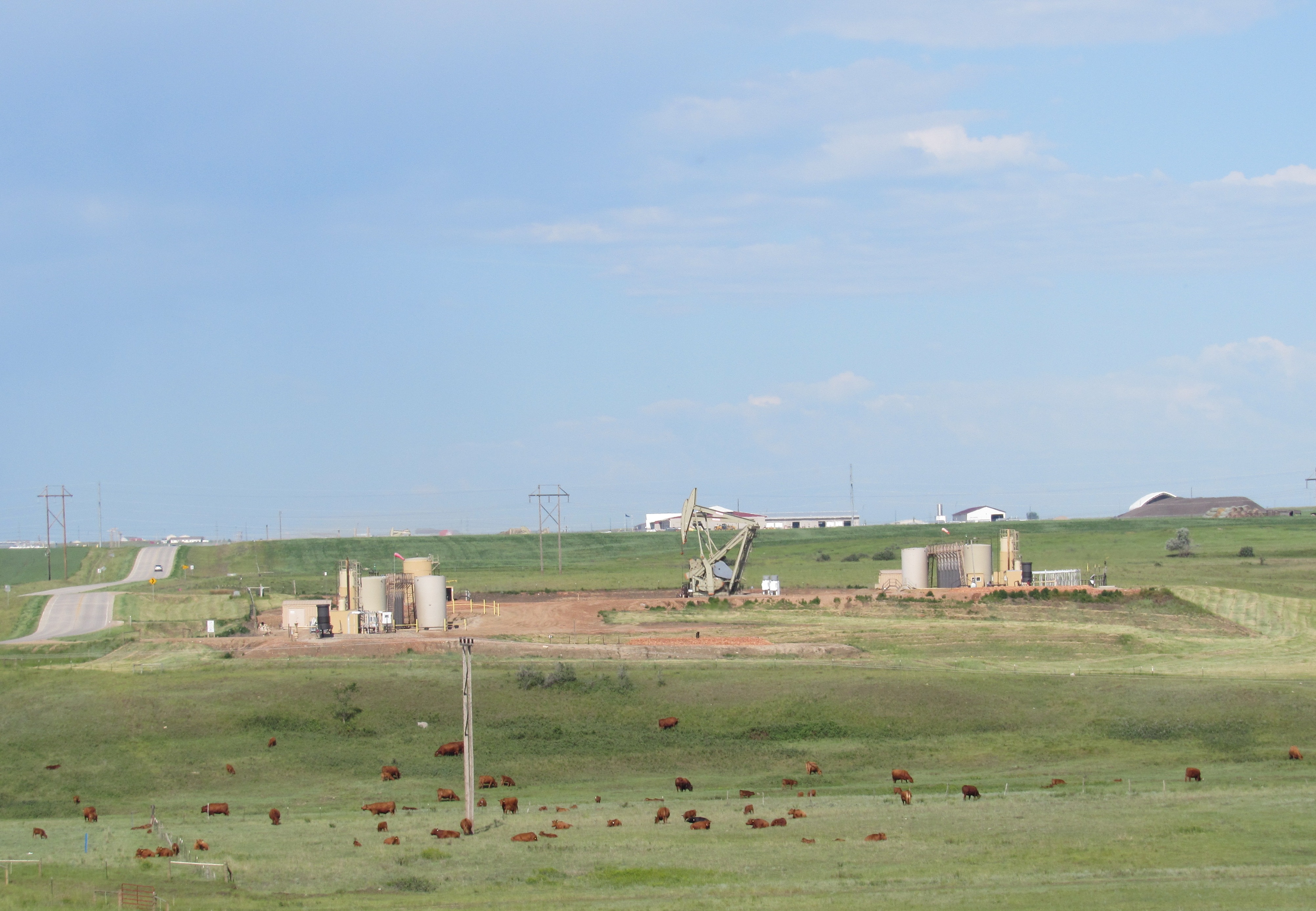
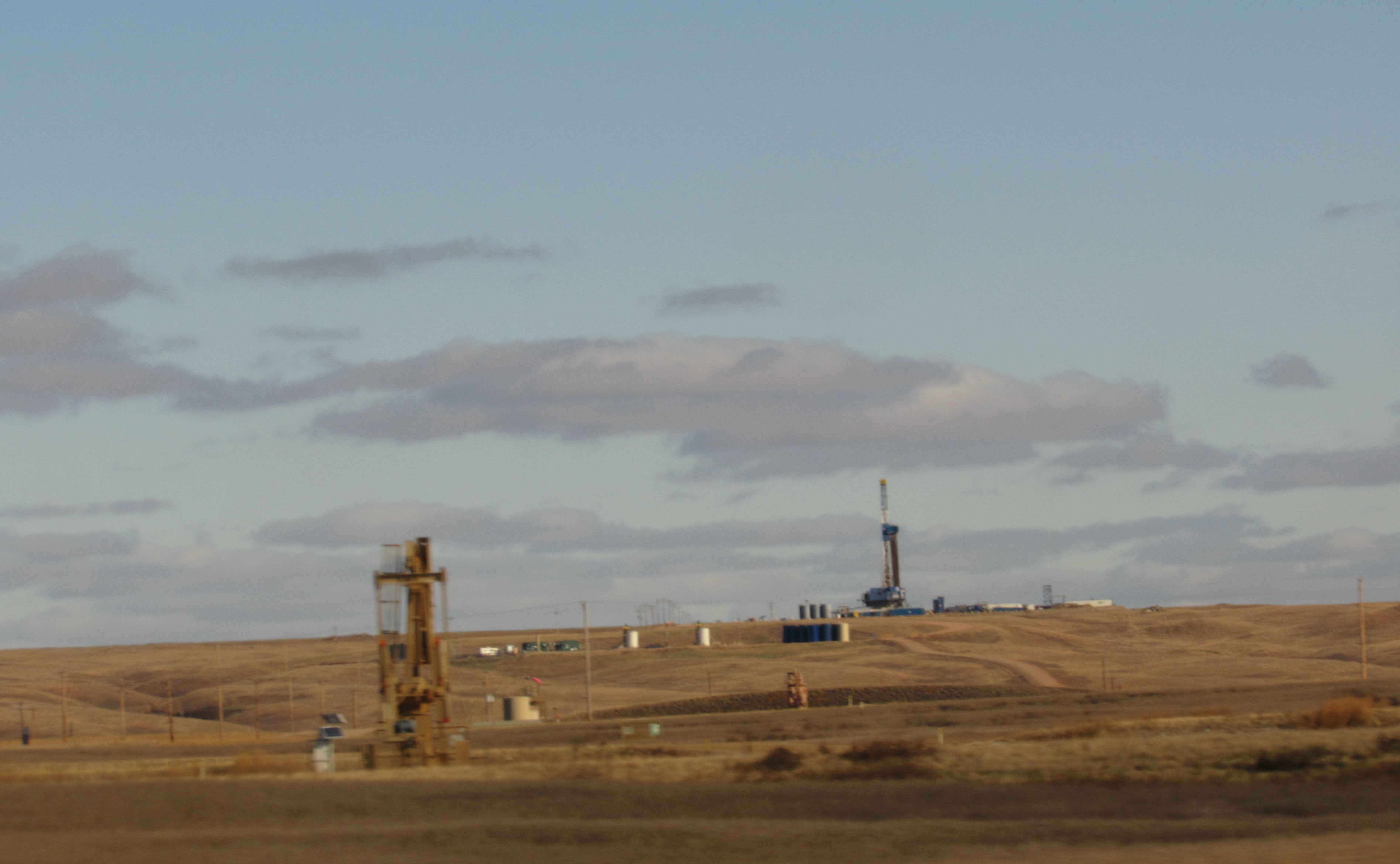
Beautiful picture of the North Dakota prairie with two active rigs in view.
Check out Million Dollar Way: Beautiful Photo of the Bakken.
Reminds me of when I lived in South Dakota. Except for the rigs, of course.
Million Dollar Way pulls together three estimates of recoverable oil for Bakken field – Estimates of Bakken Recoverable Oil.
Three data points: Read more…